


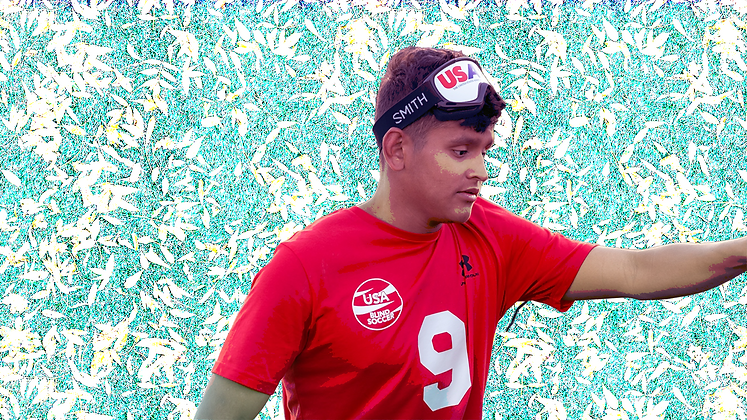
Blind athletes do more than compete.
They inspire.
For the first time, the United States has a national blind soccer team. But the route to reaching the peak was even harder than you may think.
The interpretation of a sound depends on the perspective of the person who hears it.
Take the roar of a crowd in an arena, for instance. It can energize some and intimidate others. The high-pitched note of a whistle can signal the start of a game or the end of it. And while the rattle of a soccer ball may go unheard to a fan, it is a precise signal for blind soccer players.
Blind soccer may be unknown to many fans, but it has been a part of the Summer Paralympic Games since its 2004 debut in Athens, Greece. Blind athletes from around the world participate in what is commonly referenced as “the beautiful game,” one meant to be enjoyed by all regardless of wealth or physical standing because of the artistic quality of the sport that transcends the action itself.
For the blind, however, the game’s beauty existed only in their imaginations. Like many sports, soccer remained a near impossibility for people with disabilities. Sports in general were often inaccessible, whether through a lack of funding or understanding. There were no American blind soccer role models, no team to be inspired by and no tangible reason to believe it was possible in the country.
Until now.
To read more and to view an audio version of this story, click below!